Freeze dryer vs dehydrator
A freeze dryer can make a tray of beef stew shelf-stable for years. A dehydrator can turn a basket of apples into snacks before supper. Both sound perfect for a homestead pantry, until you look at the price tag, the power draw, and the way each machine actually fits into a normal week of chores.

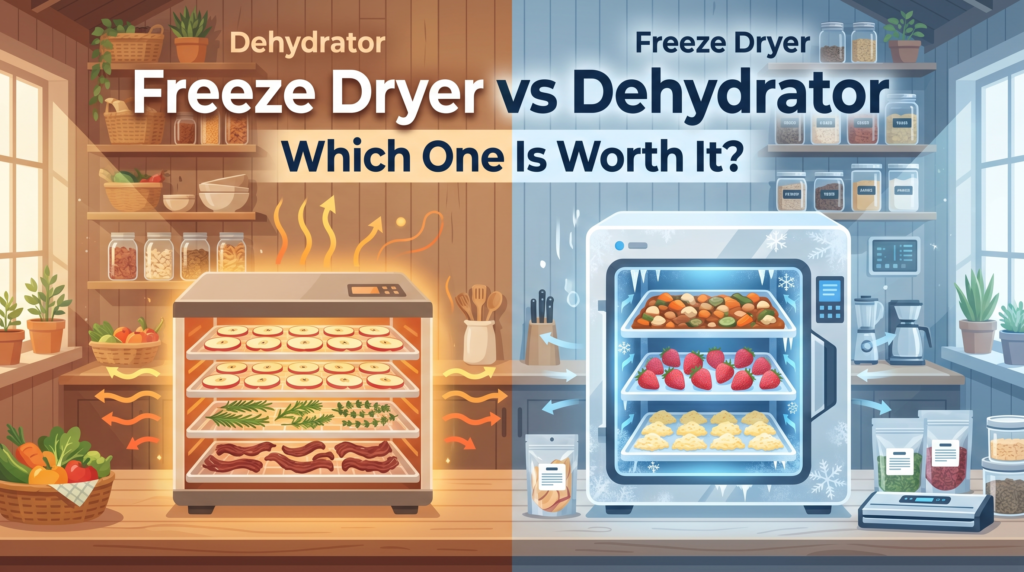
That is where the freeze dryer vs dehydrator decision gets interesting. This is not just a gadget comparison. It is a question about how you preserve food, how much electricity you can spare, what your family really eats, and whether you want long-term emergency meals or everyday pantry ingredients.
For most homesteaders, a dehydrator is the better first purchase. A freeze dryer can be worth it, but only when you have enough harvest volume, storage space, and budget to use it hard.
What Each Machine Actually Does
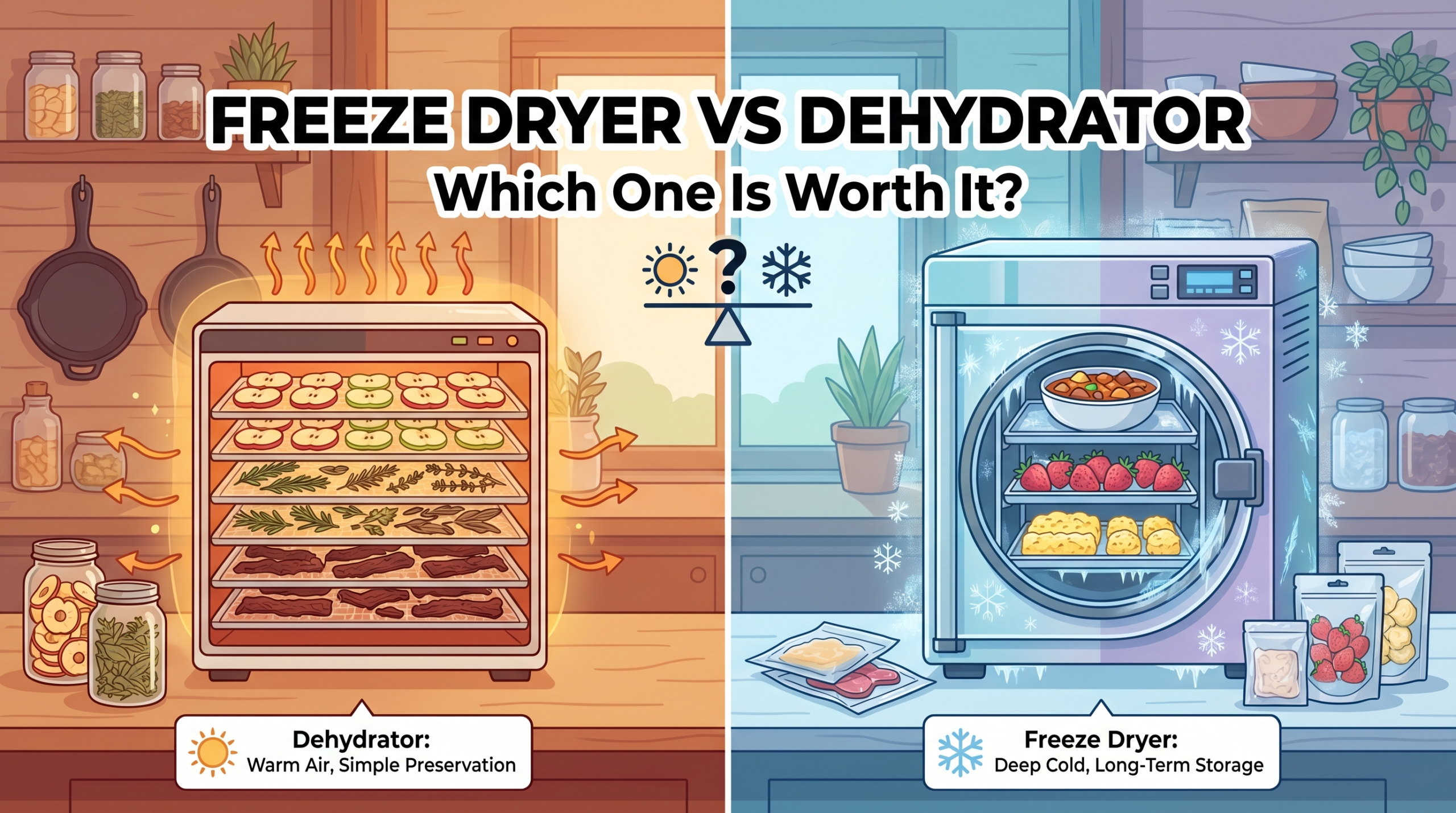
A dehydrator uses warm air and steady airflow to remove moisture from food. It is simple, affordable, and excellent for fruit, herbs, vegetables, mushrooms, jerky, fruit leather, and trail snacks. The texture changes, flavors concentrate, and the finished food usually needs an airtight container and a cool, dark storage spot.
A freeze dryer works differently. Food is frozen, then moisture is removed under vacuum through sublimation. Instead of melting ice into water, the machine pulls ice directly into vapor. That is why freeze-dried food keeps more of its original shape, color, and texture after rehydrating.
In plain homestead terms:
- A dehydrator is best for simple, low-cost food preservation.
- A freeze dryer is best for long-term meals, high-value foods, and emergency storage.
- A dehydrator changes food more; a freeze dryer preserves food more.
- A dehydrator is easy to run often; a freeze dryer needs planning.
If you are still building basic food skills, read our guide to off-grid skills and homestead tips. Drying, canning, root cellaring, and fermenting usually matter more than owning the fanciest machine in the room.
Cost: The First Reality Check
A good dehydrator can cost less than a weekend grocery run. Entry-level units work for herbs and fruit slices, while larger stainless models with horizontal airflow are better for serious garden harvests. Most homesteaders can get a reliable machine somewhere in the low hundreds.
A home freeze dryer is a major purchase. By the time you include the machine, pump oil or filter maintenance, trays, bags, oxygen absorbers, and storage bins, the real cost can land in the same mental category as a small greenhouse, a wood stove, or a used utility trailer.
When the cost makes sense
A freeze dryer starts making sense when you preserve high-value food regularly. Think cooked meats, eggs, dairy-heavy meals, leftovers, backpacking food, emergency meals, and garden produce that would otherwise be wasted. It also makes sense for families who already spend money on commercial freeze-dried meals.
A dehydrator makes sense almost immediately if you grow herbs, apples, tomatoes, peppers, onions, mushrooms, zucchini, berries, or medicinal plants. It pays for itself in small ways: fewer wasted herbs, better soup ingredients, snacks without store packaging, and compact storage.
Here is the honest test: if you would not fill a freeze dryer at least a few times a month during harvest season, start with a dehydrator.
Food Quality and Shelf Life
Freeze-dried food wins on long-term storage when it is packaged correctly. It can keep excellent quality for years because the moisture level is extremely low. The texture also comes back surprisingly well after rehydration. Freeze-dried strawberries taste bright, scrambled eggs rehydrate better than most people expect, and full meals can be stored in lightweight pouches.
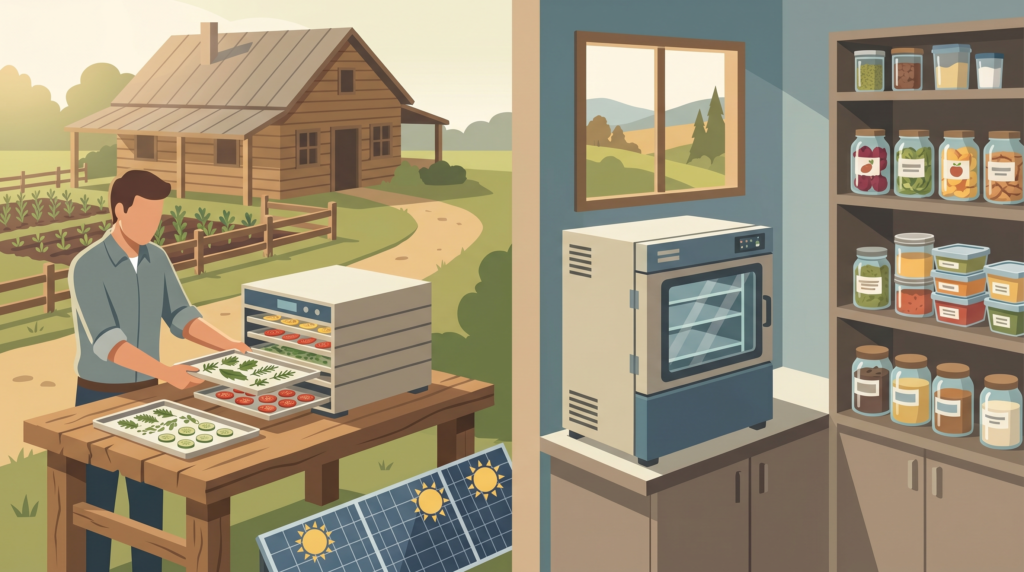
Dehydrated food has a shorter practical shelf life, but it is still extremely useful. The National Center for Home Food Preservation notes that dried foods need clean, dry, insect-proof storage and should be kept cool, dark, and dry. Many home-dried foods are best used within months to a year, depending on the food and storage conditions.
The difference matters. If you want a working pantry for this winter, dehydrating is enough for many foods. If you want a 10-year emergency pantry with full meals, freeze drying is much stronger.
What tastes better?
It depends on the food. Dehydrated tomatoes, apple rings, onion flakes, hot peppers, and herbs can taste better than fresh in soups and stews because the flavor is concentrated. Freeze-dried fruit keeps a lighter crunch and a fresher flavor. Freeze-dried meals usually rehydrate more like leftovers than dried meals do.
But do not overlook texture. Dehydrated zucchini chips can be chewy. Freeze-dried zucchini can be brittle. Dehydrated jerky is a feature, not a flaw. Freeze-dried meat needs thoughtful seasoning and rehydration. The best choice depends on how you plan to eat the food.
Power Use and Off-Grid Practicality
This is where a lot of homesteaders change their mind. A dehydrator uses electricity too, but it is simple and predictable. You can run it during sunny hours, move batches around your schedule, or use a solar dehydrator for certain foods in dry climates.
A freeze dryer is heavier on power and runs for long cycles. It also needs a stable indoor space, ventilation, and enough power reliability to finish a batch. If your off-grid solar system is already working hard to run refrigeration, a well pump, internet, lights, and tools, adding a freeze dryer may push the system past comfort.
Before buying one, ask:
- Can my inverter handle the load?
- Can my batteries carry an overnight cycle?
- Do I have backup power if weather changes?
- Will summer heat make the room too warm?
- Do I have a clean, dry place to package food immediately?
For context on planning energy loads, remember that a food preservation tool is still an appliance, and appliances have to fit the power system you actually own.
What Each One Is Best For
Choose a dehydrator for everyday homestead food
A dehydrator shines when you want low-cost, low-drama preservation. It is perfect for herbs, soup mixes, teas, apple slices, tomato powder, dried peppers, fruit leather, and jerky. It is also forgiving. If you slice evenly, rotate trays when needed, cool food fully, and package it well, you can build a useful pantry without turning the kitchen into a laboratory.
The USDA explains that shelf-stable foods are safe at room temperature only when they are properly processed to prevent microbial growth. Their shelf-stable food safety guidance is a good reminder that dry does not mean careless. Moisture, fat, poor packaging, and warm storage can still ruin food.
Choose a freeze dryer for long-term meals
A freeze dryer is strongest when you want complete meals and premium long-term storage. Chili, stew, cooked rice dishes, eggs, yogurt drops, fruit, vegetables, and lean cooked meats can all fit the system. It is especially useful if you want shelf-stable convenience without relying entirely on commercial emergency food buckets.
The catch is workflow. Freeze drying is not a casual “I have ten extra tomatoes” tool. It rewards batching, pre-freezing, labeling, oxygen absorbers, Mylar bags, and a habit of keeping records. If that sounds satisfying, you may love it. If it sounds like one more machine yelling for attention, you may not.
Best Choice for Different Homesteads
For a beginner homestead, buy a dehydrator first. It teaches slicing, drying, packaging, storage checks, and recipe planning without a huge investment.
For a serious garden household, a large dehydrator is still the workhorse. You can process herbs, onions, garlic, peppers, greens, fruit, and tomatoes all summer. Add canning and cold storage, and your pantry gets strong fast. Our self-sufficient backyard guide covers why food storage has to be part of the garden plan, not an afterthought.
For a family focused on emergency preparedness, hunting, bulk cooking, or backpacking meals, a freeze dryer can be worth the money. It lets you preserve foods a dehydrator cannot handle well and build lightweight meals that store for a long time.
For a small off-grid cabin, be careful. A dehydrator is easier to support. A freeze dryer may require generator time or a larger solar setup than you planned.
Conclusion: Which One Is Actually Worth It?
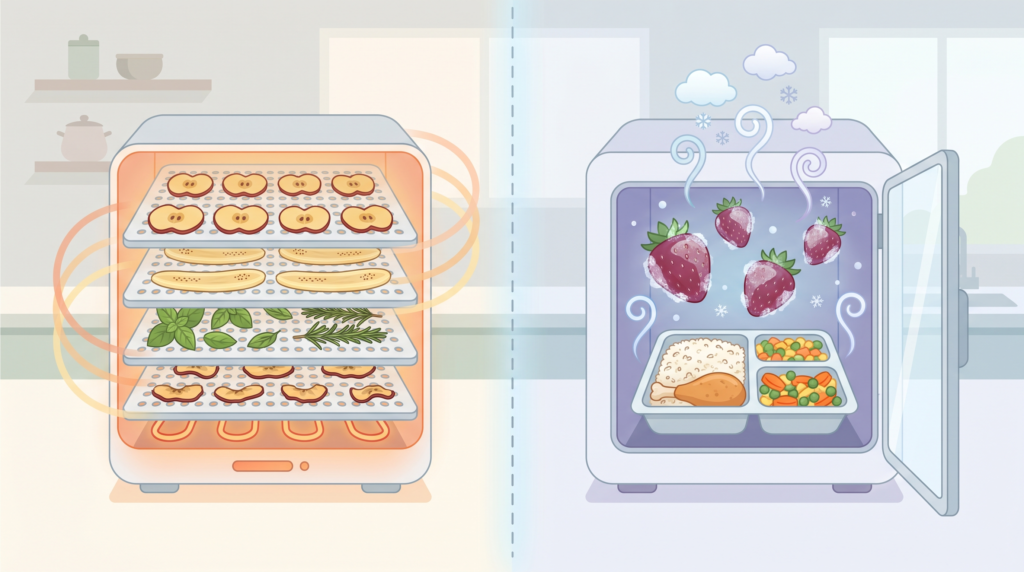
If you are choosing one machine, buy the dehydrator first. It is cheaper, easier to run, easier to repair around, and useful during the first week you own it. It fits the rhythm of a real homestead: herbs today, apple slices tomorrow, onions when the harvest comes in.
A freeze dryer is worth it when you have the money, power, space, and food volume to keep it busy. It is not just a better dehydrator. It is a different kind of pantry tool, built for long-term meals and high-value preservation.
The strongest homestead pantry is rarely built around one machine. It is built with layers: dehydrating, canning, freezing, fermenting, root cellaring, and, when it truly fits, freeze drying.
FAQ
Is a freeze dryer better than a dehydrator?
A freeze dryer is better for long-term storage, full meals, and foods that need to rehydrate well. A dehydrator is better for low-cost everyday preservation like herbs, fruit, vegetables, jerky, and soup ingredients.
Which is cheaper to run?
A dehydrator is usually cheaper to buy and easier to run. A freeze dryer uses more power, runs longer cycles, and has more packaging and maintenance costs.
Can dehydrated food last for years?
Some dried foods can keep a long time under excellent conditions, but many home-dehydrated foods are best used within months to a year. Cool, dry, dark storage and airtight packaging matter.
Can you freeze dry food off grid?
Yes, but only if your power system can handle the load and cycle length. Many off-grid households need a strong solar setup, battery bank, or generator backup to run a freeze dryer reliably.
What should homesteaders dehydrate first?
Start with herbs, apple slices, onions, peppers, tomatoes, mushrooms, and fruit leather. These are forgiving, useful, and easy to store in jars or vacuum-sealed bags.