Self-Sufficient Urban Garden
The first mistake people make with a city garden is trying to make it look like a tiny farm. A backyard in town, a patio, or a balcony cannot behave like five acres in the country. But it can still feed you in ways that matter: herbs you stop buying, greens you cut every week, tomatoes that actually taste like summer, and compost that turns kitchen scraps into soil instead of trash.

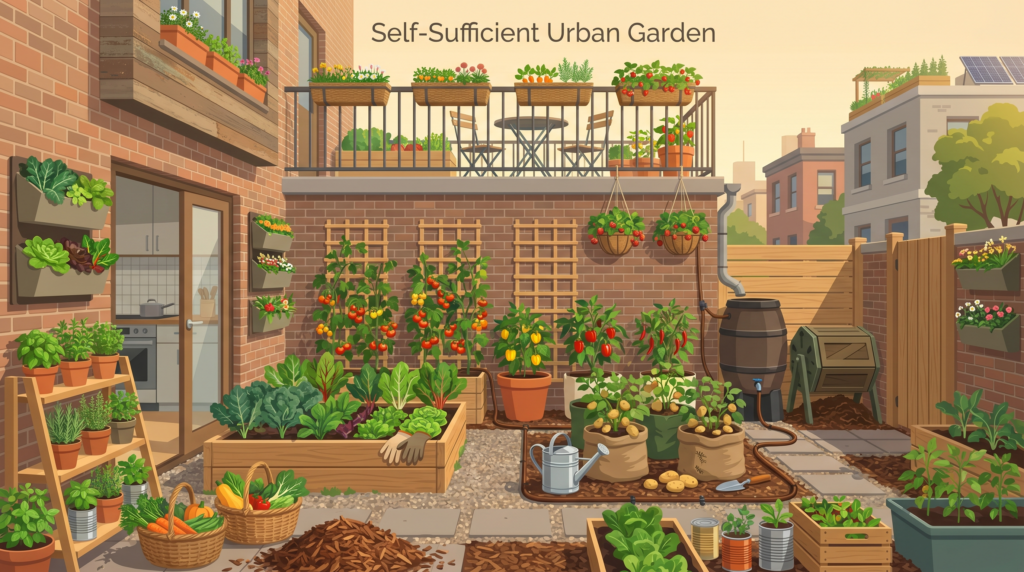
A self sufficient urban garden is not about growing 100 percent of your calories on a fire escape. That is a fantasy for most households. The real goal is more practical: grow high-value food in a small space, reduce waste, build soil, and make your kitchen less dependent on every grocery run.
This guide shows how to design a small city garden that works in real life, including containers, vertical growing, crop choices, compost, water, and the limits that beginners should respect.
Start With the Space You Actually Have
Urban gardening starts with observation, not seed catalogs. Before buying raised beds or towers, spend a week watching light, wind, heat, foot traffic, water access, and shade. A sunny strip along a fence may be more productive than the center of a yard. A balcony with six hours of morning sun may grow greens better than tomatoes. A driveway edge can become a container garden if it is the only spot with light.
USDA’s urban agriculture resources recognize that food production can happen in cities through gardens, containers, small plots, and innovative growing spaces. Their Urban Agriculture and Innovative Production page is a useful reminder that small-scale city growing is part of American agriculture now, not just a hobby on the side.
Map your limits first
- Sun: most fruiting crops need 6 to 8 hours of direct light.
- Water: the best garden is close to a hose or rain barrel.
- Weight: balconies and rooftops need safe load limits.
- Rules: check leases, HOA rules, and city ordinances.
- Pests: city squirrels, rats, birds, and dogs are real garden pressure.
Once you know the limits, the design gets easier. The goal is not to use every square foot. The goal is to use the best square feet well.
Grow Food That Pays Back in a Small Space
A small urban garden should not start with corn, pumpkins, or rows of storage beans. Those crops are wonderful, but they ask for more space than most city gardeners can spare. Start with food that is expensive, fresh, productive, or hard to buy in good quality.
Herbs are the easiest win. Basil, parsley, cilantro, thyme, rosemary, oregano, mint, chives, and dill can save real money because store-bought herbs are expensive and often wasted. Grow mint in its own container unless you want it everywhere.
Leafy greens are next. Lettuce, arugula, kale, Swiss chard, bok choy, and mustard greens can be cut repeatedly. They grow fast, fit containers, and make a small garden feel useful early in the season.
Then add fruiting crops where you have sun. Cherry tomatoes, patio peppers, bush cucumbers, compact zucchini, strawberries, and pole beans can produce heavily in a small footprint. For calories, add potatoes in grow bags or large containers if you have enough sun and soil volume.
Best beginner crops for city self-sufficiency
- Herbs for daily cooking.
- Cut-and-come-again salad greens.
- Cherry tomatoes instead of giant slicing tomatoes.
- Peppers in warm sunny containers.
- Potatoes in grow bags for a compact staple crop.
- Green onions and garlic chives for repeat harvests.
If you want a broader backyard food strategy, our self-sufficient backyard guide covers how gardening, compost, water, and food storage fit together.
For a true beginner, the easiest way to stay consistent is to choose three food categories: one daily herb area, one fast greens area, and one summer fruiting crop area. That gives you a reason to visit the garden often without making the whole space complicated. If you are just getting started with the larger lifestyle, our homesteading from scratch guide can help you build the skills in a sane order.
Containers, Raised Beds, and Vertical Growing
Containers are the urban gardener’s best friend, but only when they are big enough. Tiny pots dry out fast and stunt plants. A tomato in a five-gallon bucket may survive; a tomato in a ten- or fifteen-gallon container has a better chance of producing well during hot weather.
Use quality potting mix for containers, not heavy yard soil. Containers need drainage, air space, and consistent moisture. Mulch the top with straw, shredded leaves, or compost to slow evaporation.
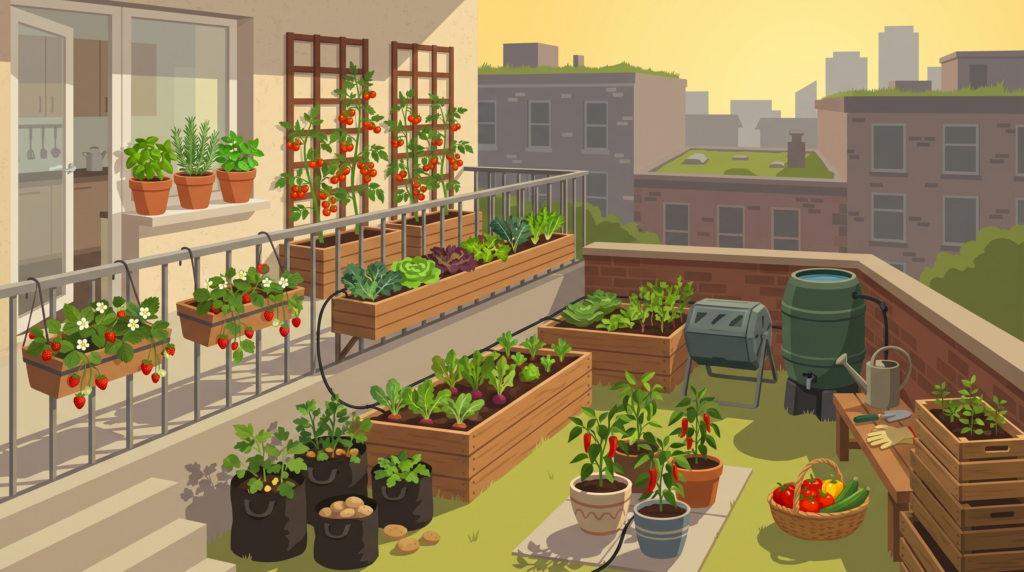
Raised beds work well in small yards because they define the growing area and keep foot traffic out of the soil. Keep beds narrow enough that you can reach the middle without stepping in. Three to four feet wide is comfortable for most people.
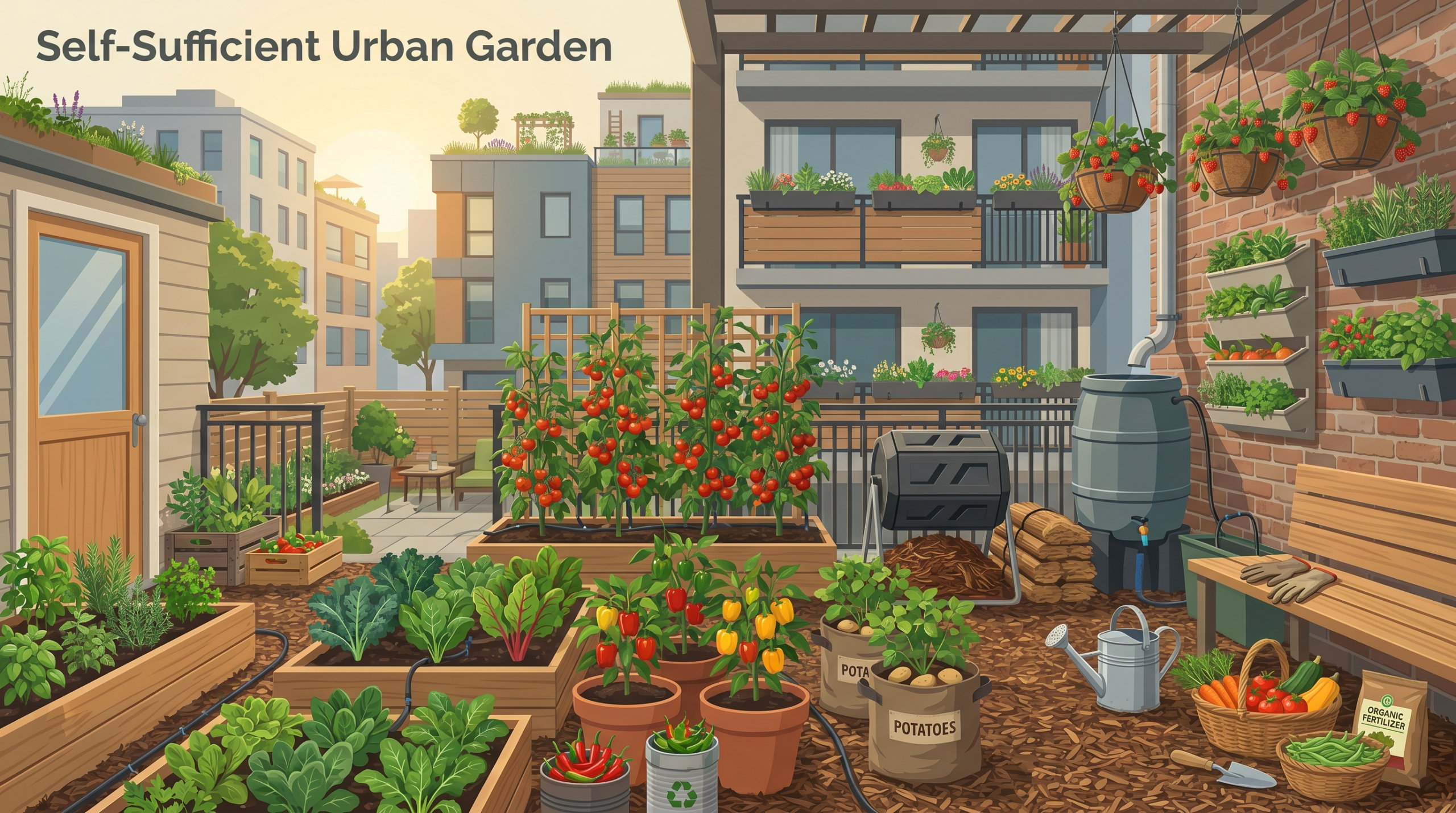
Vertical growing is where small spaces start to feel generous. Trellis cucumbers, pole beans, peas, indeterminate tomatoes, and small melons. Use fences, cattle panels, strings, balcony rails, or sturdy obelisks. Just remember that vertical plants cast shade, so place them where they will not block shorter crops.
Small-space layout idea
Put herbs closest to the kitchen door. Place greens where they get morning sun and afternoon shade. Put tomatoes and peppers in the brightest spot. Use the back fence for trellised crops. Keep compost and tool storage easy to reach so the garden does not become a chore you avoid.
Compost Without Annoying the Neighbors
Compost is what makes an urban garden feel more self-sufficient. It turns coffee grounds, vegetable scraps, leaves, and spent plants into fertility. It also reduces the amount of organic material you throw away.
The EPA’s home composting guidance explains that food scraps and yard trim can be recycled into compost and used to improve garden soil. In a city setting, the key is managing it cleanly.
Use a closed bin, tumbler, worm bin, or bokashi system if pests are a concern. Avoid meat, grease, dairy, and oily foods in outdoor compost unless you really know what you are doing. Chop scraps small, balance wet food waste with dry leaves or shredded cardboard, and keep the bin covered.
A worm bin is excellent for apartments, garages, and shaded patios. It does not produce huge volume, but it creates rich castings for seedlings and containers. A tumbler is cleaner-looking for small yards, though it needs enough dry material to avoid becoming a wet mess.
If you share walls with neighbors, keep compost boring. Use sealed containers for kitchen scraps, bury fresh scraps in the center of the bin, and keep a bag of shredded cardboard nearby. A clean compost system should smell earthy, not sour. If it smells bad, it is usually too wet or too rich in food scraps.
Water Is the Hidden Constraint
Urban gardens often fail in July because watering becomes annoying. A garden that needs hand watering twice a day will lose the argument with work, kids, travel, and heat.
Make watering easy. Use drip irrigation, self-watering planters, ollas, mulch, saucers under thirsty containers, and a hose that actually reaches. Group pots by water need. Put the thirstiest crops where you see them every day.
Convenience is not laziness here. It is good garden design.
Rain barrels can help, but check local rules and understand their limits. A full barrel sounds like a lot until a hot week arrives. Use stored rainwater as a supplement, not the only plan for high-value summer crops.
Common Mistakes to Avoid
The first mistake is growing too many novelty crops. One purple carrot is fun. A steady supply of salad greens, herbs, and tomatoes is useful. Build the useful garden first, then experiment.
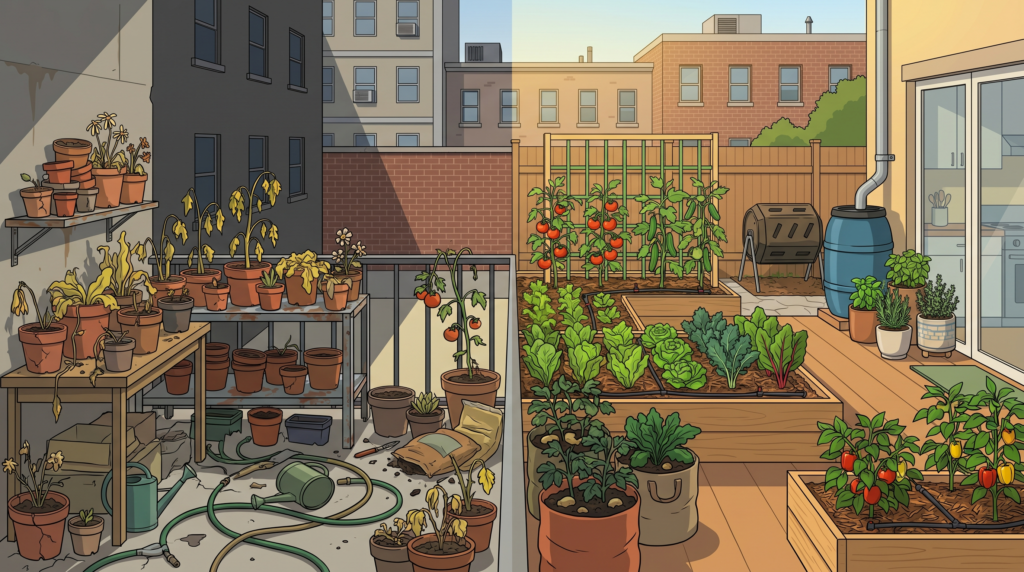
The second mistake is underfeeding containers. A container plant cannot send roots across the yard to find nutrients. Compost, slow-release organic fertilizer, liquid feed, and fresh potting mix all matter.
The third mistake is ignoring heat. Brick walls, pavement, black containers, and balconies can turn summer sun into an oven. Use light-colored containers, mulch, shade cloth, and morning-sun locations where heat is brutal.
Watch for these too:
- Putting tall plants where they shade everything else.
- Buying tiny decorative pots for food crops.
- Letting compost attract rodents.
- Forgetting pollinators on balconies and high patios.
- Starting too big and burning out by midsummer.
Conclusion
A self sufficient urban garden is not a miniature farm. It is a smart food system tucked into the space you have. Grow expensive fresh crops, compost cleanly, water efficiently, use vertical space, and accept the limits of the site.
If your garden can give you herbs, greens, tomatoes, peppers, compost, and a little confidence, it is already doing serious work. Self-sufficiency starts as a habit before it becomes a harvest.
FAQ
Can an urban garden be self-sufficient?
It can be partially self-sufficient. Most city gardens will not provide all household calories, but they can supply herbs, greens, tomatoes, peppers, compost, and meaningful grocery savings.
What should I grow first in a small urban garden?
Start with herbs, salad greens, cherry tomatoes, peppers, green onions, and compact cucumbers. These crops give strong returns in small spaces.
Can I compost in an apartment?
Yes. Worm bins, bokashi buckets, and small sealed compost systems can work indoors or on a balcony when managed carefully.
Are raised beds better than containers?
Raised beds are better for yards with enough space and sun. Containers are better for patios, balconies, renters, and flexible layouts.
How much sun does an urban vegetable garden need?
Fruiting crops need about 6 to 8 hours of direct sun. Greens and herbs can often produce with less, especially in hot climates.
Keywords
- Self sufficient urban garden
- Urban garden ideas
- How to grow food in a small city space
- Urban homesteading ideas
- Small space vegetable garden
- Self sufficiency in the city
- Urban food production
- Container gardening for vegetables
- Balcony vegetable garden
- Raised bed urban gardening
- Vertical gardening ideas
- Composting in small spaces
- City homestead garden
- Urban gardening for beginners
- Grow more food in small spaces