Complete beginner’s guide to off grid toilets


Why you need a toilet solution off the grid
When you imagine living off the grid, your first thoughts might be about solar panels, wood stoves, or growing your own food. But one of the most important and often overlooked questions is this: what about the bathroom? Every homestead, cabin, or tiny home needs a reliable toilet system, and when you are not connected to city utilities, that responsibility falls entirely on you.
Proper sanitation is not just a matter of comfort. It is a critical part of health, hygiene, and environmental protection. Without a good toilet setup, you risk contaminating water supplies, spreading disease, or dealing with unpleasant odors that can make off grid living miserable.
The importance of sanitation and hygiene
Human waste is full of bacteria, pathogens, and chemicals that need to be handled carefully. On the grid, city sewage systems or septic tanks deal with this for us. Off the grid, you are in charge of making sure waste is managed safely. A poorly designed system can lead to groundwater contamination, which threatens both your health and the health of your community.
Hygiene is also a daily quality of life issue. If your toilet system is inconvenient, messy, or smelly, it becomes a source of frustration. A good off grid toilet should be safe, easy to maintain, and reasonably comfortable to use. You will be using it every day, so it deserves as much thought as your kitchen or your water system.
Environmental considerations
Living off grid often comes with a desire to be more eco friendly. Traditional flush toilets use large amounts of water, which is not sustainable when you rely on wells, rainwater, or hauled water. Off grid toilet options usually minimize or eliminate water use entirely.
Composting toilets, for example, turn waste into usable fertilizer when managed correctly. Outhouses keep waste contained and separate from living areas. Incinerating toilets burn waste to sterile ash, reducing volume and preventing contamination. Each option has different impacts on the environment, and part of your decision is choosing the balance that fits your values and resources.
Waste management challenges
Going off grid also means thinking long term. What will you do with the waste produced by your household? On average, each person produces about 200 pounds of human waste per year. Multiply that by your family size, and you can see why planning matters.
Some systems require emptying compost bins, others involve hauling buckets, and some high tech models incinerate waste so there is almost nothing to dispose of. No matter what you choose, waste has to go somewhere, and handling it safely is key to keeping your homestead running smoothly.
Why this decision matters
Many beginners push the toilet question to the bottom of the list, focusing instead on electricity, food, or shelter. But ask anyone who has lived off grid for more than a few weeks, and they will tell you: the bathroom setup makes or breaks your experience.
Choosing the right off grid toilet is about more than convenience. It is about protecting your health, respecting the land, and making your daily life comfortable. The good news is that there are multiple solutions available, from simple do it yourself setups to advanced composting or incinerating systems.
By understanding the importance of sanitation and thinking about your needs early, you can avoid headaches down the road. Off grid toilets are not glamorous, but they are one of the most essential parts of sustainable living.
Types of off grid toilets explained
When it comes to living off the grid, there is no one size fits all toilet solution. The best option for you depends on your location, budget, household size, and how much maintenance you are willing to do. Here are the most common types of off grid toilets, with their pros and cons, to help you choose the right system.
Composting toilets
Composting toilets are one of the most popular off grid options. They work by breaking down human waste into compost through natural aerobic decomposition. Modern composting toilets are designed with ventilation systems that minimize odor and keep the process efficient.
There are self contained units, where the compost chamber is part of the toilet itself, and central systems, where waste goes into a larger container outside or under the building.
Pros:
- Eco friendly and waterless
- Produces compost that can be used on non food plants
- Relatively easy to maintain once you understand the process
Cons:
- Higher upfront cost (500 to 2000 dollars for most units)
- Requires careful management of moisture and carbon material (like sawdust or coconut coir)
- Compost must be handled and removed regularly
Composting toilets are a great fit for families who want a sustainable solution and are willing to manage the system responsibly.
Bucket toilet systems
The bucket toilet, sometimes called the “humanure” system, is the simplest and cheapest off grid toilet. It is exactly what it sounds like: a five gallon bucket fitted with a seat. After each use, you cover the waste with a carbon material such as sawdust, wood shavings, or peat moss to control odor and support decomposition.
When the bucket is full, it is emptied into a compost bin for long term breakdown.
Pros:
- Very low cost (under 50 dollars to set up)
- Easy to build with minimal tools
- Works anywhere, even in temporary setups
Cons:
- Requires frequent emptying
- Can be messy if not managed carefully
- May not be legal in some areas without a proper composting system
Bucket toilets are best for beginners on a tight budget, campers, or those who need a temporary solution while building a more permanent system.
Traditional outhouses
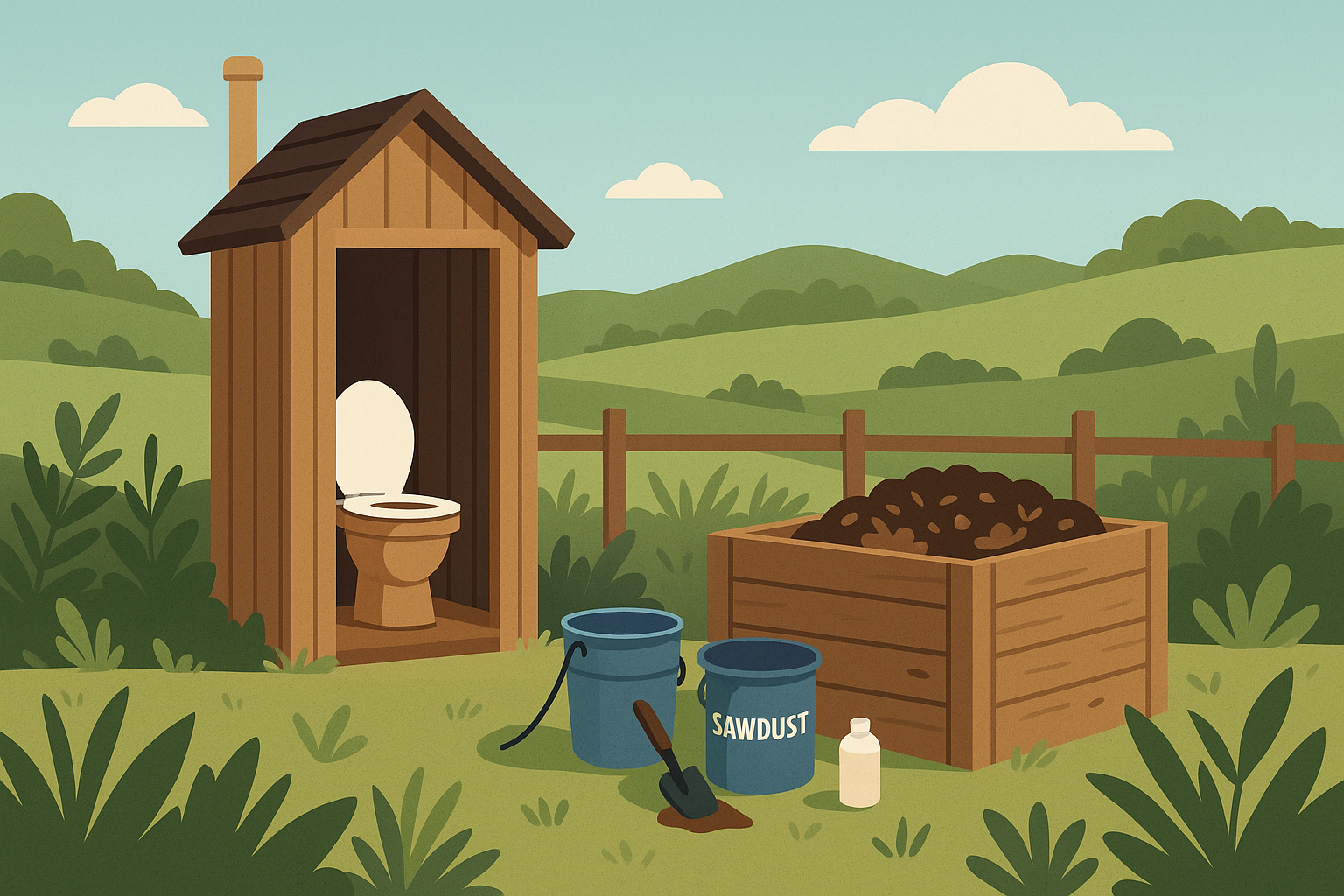
The outhouse is the classic off grid toilet. It is simply a small structure built over a pit dug into the ground. Waste accumulates in the pit, and when it is full, the outhouse is either moved or the pit is covered and left to decompose.
Pros:
- Simple and long lasting if managed correctly
- Low cost if you have land and tools
- No need for electricity or complex parts
Cons:
- Requires digging large pits
- Potential for odor if not ventilated well
- Risk of groundwater contamination if placed too close to wells or streams
Outhouses are a traditional choice for remote cabins, hunting camps, or homesteads with enough land to rotate pits over time.
Incinerating toilets
Incinerating toilets are a high tech option. They burn waste at high temperatures, reducing it to a small amount of sterile ash. They can be powered by electricity, propane, or natural gas.
Pros:
- Leaves behind only sterile ash
- No composting or waste handling
- Works in places where composting is impractical
Cons:
- Very high cost (2000 to 5000 dollars or more)
- Requires fuel or electricity
- Less eco friendly than composting options
These are ideal for cold climates where composting is difficult or for households that want a low maintenance system and are willing to invest in it.
Portable or camping toilets
Portable toilets are often used for RVs, boats, or short term camping but can serve as an off grid option in certain situations. They usually use chemical treatments or small water flush systems with removable tanks that need to be emptied at dump stations.
Pros:
- Affordable and convenient
- Compact and portable
- Easy to set up for temporary use
Cons:
- Requires ongoing purchase of chemicals
- Waste disposal depends on access to dump stations
- Not sustainable for long term use
Portable toilets are a short term solution or backup system, not a permanent off grid setup.
Building your own DIY off grid toilet

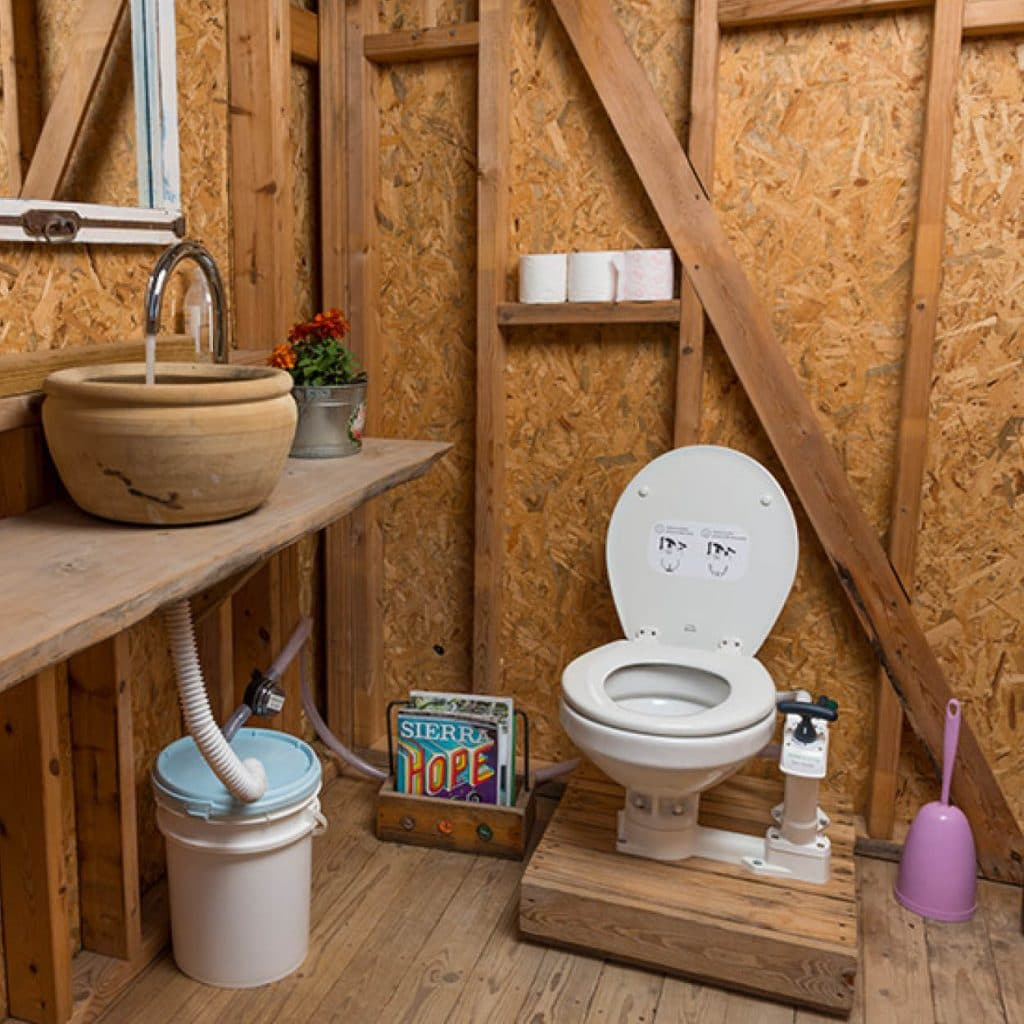
For many beginners, the idea of building their own toilet system feels intimidating. But the truth is, a diy off grid toilet can be one of the simplest and most practical projects you take on. Whether you are waiting to install a larger composting unit or just want a low cost, immediate solution, you can create a safe and usable toilet with basic materials.
Materials and setup basics
The most common DIY option is the bucket toilet. To get started, you will need:
- a sturdy five gallon bucket (preferably with a tight fitting lid)
- a toilet seat that either snaps onto the bucket or is attached with a simple wooden frame
- absorbent cover material such as sawdust, peat moss, shredded leaves, or wood shavings
- a secondary compost bin or pile where the full buckets will be emptied
The setup is straightforward. Place a layer of cover material in the bottom of the bucket before the first use. After each use, cover the waste completely with more sawdust or similar carbon material. This step is crucial, as it controls odor, absorbs moisture, and kickstarts the composting process once the bucket contents are emptied into a larger bin.
Many people build a wooden box or frame around the bucket to make it look and feel more like a conventional toilet. Adding a hinged lid makes it more comfortable and helps contain odor between uses.
Managing waste safely
Once the bucket is full, it needs to be emptied into a compost system. A two bin setup works well: fill one bin for six months to a year, then let it rest while you fill the second bin. Over time, the waste breaks down into safe compost that can be used on non edible plants, trees, or ornamentals.
Safety is critical. Human waste should not be used directly on vegetable gardens or food crops, as it can contain pathogens. Allowing the compost to break down fully for at least a year is the safest approach. High heat and time both play a role in making the compost safe to handle.
If you do not want to compost humanure, you will need to research local disposal regulations. Some areas allow burial of waste in designated pits, while others have strict laws about handling and disposal.
Preventing odors
Odor control is often the biggest concern for beginners. Fortunately, with the right cover material, smells can be nearly eliminated. Sawdust is one of the best choices, as it absorbs moisture and neutralizes odor effectively. Coconut coir, shredded leaves, or even dry soil can also work. The key is to fully cover each deposit so no waste is exposed to air.
Ventilation also helps. If your DIY toilet is inside a cabin or shed, adding a small vent pipe to the outside can keep air fresh. A simple solar powered fan can improve airflow for larger systems.
Another trick is to keep a bucket of extra cover material nearby, along with a scoop. This makes it easy for everyone to use the system correctly without forgetting to cover the waste.
Why DIY toilets work well for beginners
DIY off grid toilets may not be glamorous, but they are affordable, practical, and effective. They give beginners a chance to start living off grid immediately without waiting for expensive systems. They also teach the basics of waste management and composting, which are valuable skills for any homesteader.
Many people who start with a bucket toilet eventually upgrade to a more permanent composting system, but they often keep the bucket toilet as a backup. It is portable, works during emergencies, and costs almost nothing to maintain.
The most important thing to remember is that sanitation must come first. As long as you use proper cover material, manage waste responsibly, and follow safe composting practices, a DIY toilet can be a perfectly safe and reliable off grid solution.
Legal and environmental considerations
Before setting up any off grid toilet system, it is essential to think about the legal and environmental side of things. While you may feel free living off the grid, most parts of the United States still have rules about sanitation and waste disposal. Ignoring these can lead to fines, unsafe water, or even forced removal of your setup. Responsible homesteading means balancing independence with safety and sustainability.
Local codes and regulations
The first step is to check local regulations. Some counties and states require septic systems for any permanent residence, even off grid ones. Others allow composting toilets or outhouses under certain conditions. For example, you may need to place your toilet a minimum distance from property lines, water wells, or streams.
Building permits are sometimes required, especially if you are installing a permanent composting system or outhouse. While this may feel restrictive, these rules are usually designed to protect water quality and public health. Contact your county health department or building authority before building to avoid costly mistakes.
It is also important to know the difference between temporary and permanent setups. A bucket toilet in a hunting cabin may be allowed with minimal oversight, while a year round residence may require proof of a safe, long term sanitation plan.
Safe waste disposal methods
Even the best toilet system will eventually require you to handle waste. How you dispose of it matters. Composting is the most eco friendly method, but it has to be done properly. Humanure should be composted in a contained system and aged for at least a year before being used on soil, and even then, it is safest for trees and ornamentals, not food crops.
If composting is not an option, burial may be allowed, but only if done carefully. Waste pits should be at least 200 feet away from water sources and wells, and at least 2 feet deep to prevent animal access. Covering the pit with soil after each use helps reduce odors and keeps insects away.
Incinerating toilets simplify disposal by reducing waste to sterile ash. The ash can be spread safely on non food areas or added to trash without risk of contamination. However, you must ensure that the system meets local fire safety codes and is approved for residential use.
Protecting water sources
One of the biggest risks of poorly managed toilets is contaminating groundwater or surface water. Even a small homestead toilet can cause serious harm if placed too close to a creek, pond, or well. Bacteria, nitrates, and pathogens can travel through soil and end up in drinking water.
Always choose a site on higher ground, away from drainage paths. Avoid sandy soils that allow waste to seep too quickly, and avoid flood prone areas. Clay or loamy soils that filter waste more slowly are safer choices.
If you use rainwater collection or a shallow well, be extra cautious about where you place your toilet. A single mistake in location can compromise your entire water supply, making it unsafe to drink.
Why legal and environmental planning matters

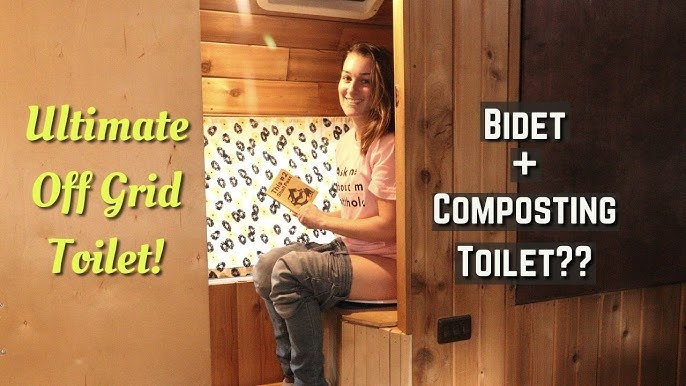
It may feel tempting to just set up whatever toilet is easiest and deal with the details later. But in reality, proper planning saves you from legal trouble, protects your family’s health, and ensures your land remains safe for years to come.
Off grid living is about independence, but it is also about responsibility. Taking the time to learn local codes, set up safe disposal, and protect water sources shows respect for your land, your neighbors, and your own future.
In the end, an off grid toilet is not just a private matter. It affects your entire environment. By approaching it thoughtfully, you build a homestead that is not only self reliant but also sustainable and safe.
Costs of different off grid toilet options
When you start looking into off grid toilet systems, one of the first things you will notice is the wide range of costs. Some solutions can be built for under 50 dollars, while others require thousands. The best choice for you depends on your budget, how permanent your setup needs to be, and how much convenience you want.
Low cost DIY systems
The bucket toilet is by far the cheapest option. For around 30 to 50 dollars, you can buy a five gallon bucket, a toilet seat, and a supply of sawdust or peat moss. If you already have scrap lumber, you can build a wooden box around the bucket for comfort.
The ongoing cost is minimal. You will need a steady supply of cover material, but many homesteaders get sawdust for free from sawmills or use shredded leaves from their own property. The main “expense” is labor, since you will need to empty buckets and manage a compost pile.
Outhouses are another low cost system, especially if you have the tools to dig a pit and build a simple shelter. If you do the labor yourself, the cost might only be a few hundred dollars for wood and hardware. However, outhouses require land with suitable soil and enough space to dig new pits over time.
Mid range composting toilets
For many off grid homesteaders, composting toilets strike the right balance between affordability and convenience. Prices range from about 500 to 2000 dollars depending on the brand and design.
Self contained units are the simplest to install and often look similar to regular toilets, making them user friendly. Central composting systems cost more but allow waste to be collected in a larger bin outside the home, reducing how often you need to empty it.
The ongoing costs are low. You may need to buy carbon material like coconut coir or wood shavings, but maintenance is relatively simple. Some units require electricity for fans or heaters, which adds a small ongoing cost if you are on solar or another off grid power system.
High end incinerating toilets
At the top of the cost spectrum are incinerating toilets. These can cost anywhere from 2000 to 5000 dollars or more, depending on whether they run on propane, natural gas, or electricity.
The benefit is convenience. Incinerating toilets reduce waste to a handful of sterile ash, which means there is no compost pile, no waste buckets, and almost no maintenance beyond emptying the ash tray. They are ideal for locations where composting is difficult, such as very cold climates.
The trade off is the high upfront cost and the need for fuel or power. Propane units require ongoing purchases of fuel, and electric units can draw a lot of energy. For some families, that makes them impractical. For others, the convenience is worth the price.
Comparing the true costs
When deciding which system is best, think about more than just the purchase price. Ask yourself:
- How much labor am I willing to put into this system?
- Do I want a temporary solution or something long term?
- Is my main priority cost, convenience, or sustainability?
A DIY bucket toilet may cost almost nothing, but it requires regular handling of waste. A composting toilet costs more upfront but is easier and more comfortable for daily use. An incinerating toilet is expensive but nearly maintenance free.
The best option for beginners is usually to start with a simple system and upgrade later. This allows you to learn how different methods work before making a major investment.
Step by step beginner’s plan for choosing an off grid toilet
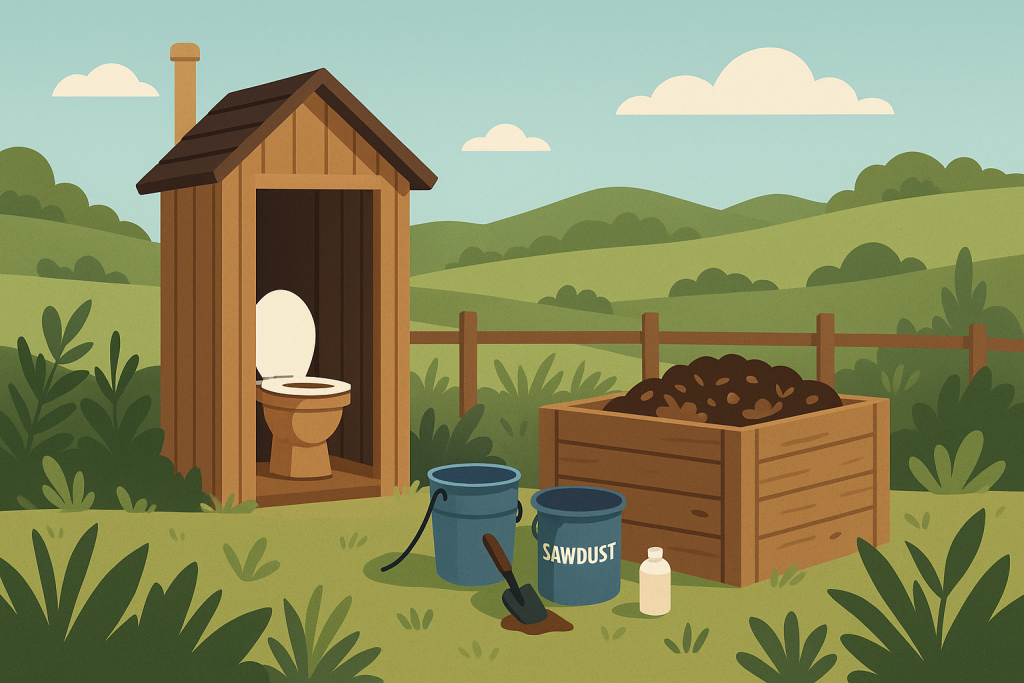
Choosing the right off grid toilet can feel overwhelming at first. With so many options—composting toilets, bucket systems, outhouses, incinerators—it is easy to get lost in the details. The best way to simplify the process is to break it down into clear steps. By following this plan, beginners can match their needs, location, and budget to the best solution without stress.
Step 1: assess your location and climate
Your environment plays a huge role in what type of toilet works best. If you live in a cold northern climate, composting can be slow during winter unless you insulate the system. In those regions, incinerating toilets or outhouses might be more practical.
In warmer climates, composting toilets thrive because the heat speeds up decomposition. If you live on rocky terrain where digging pits is difficult, an outhouse may not be realistic. On the other hand, if you have sandy soil near a water source, you will need to be extra careful with any system to avoid contamination.
Think about your space as well. Do you live on several acres where you can build a traditional outhouse? Or are you in a tiny cabin where a compact system makes more sense?
Step 2: decide your budget and needs
Money is often the biggest factor in this decision. If you are starting out with little cash, a bucket toilet system is the most affordable and reliable option. It requires more hands on maintenance, but it gets the job done.
If you can spend a bit more, a mid range composting toilet is ideal. It feels more like a standard bathroom, controls odor well, and is easier for families or guests to use.
For those with higher budgets and a desire for maximum convenience, incinerating toilets are the most low maintenance option. Just remember that they require fuel or electricity, which adds ongoing costs.
Your needs also matter. Are you living alone or with a family of five? A bucket system may work for one or two people but will fill up quickly in a large household. Composting toilets with larger capacity are better for families.
Step 3: match the system to your lifestyle
Some people enjoy hands on, sustainable living and are happy to manage compost bins. Others prefer simplicity and want the least amount of maintenance possible. Be honest with yourself about your lifestyle. If you know you will not want to empty buckets or manage compost, it may be worth investing in a higher end system.
Also consider how often you will be using the system. Is this for a full time homestead or just a weekend cabin? A bucket toilet may be perfect for occasional use but not practical for daily living.
Step 4: plan for safe waste management
No matter which system you choose, waste must be handled responsibly. That means planning a safe composting site, a way to dispose of ash, or regular access to dump stations if you use a portable unit.
Always follow the rule of keeping toilets and waste sites at least 200 feet away from water sources. This protects both your family and the environment.
Step 5: start simple and upgrade later
For beginners, the best advice is to start with a basic system. Many people begin with a bucket toilet or a simple composting unit while they learn the ropes of off grid living. Over time, as you discover what works best for your household, you can invest in a more advanced system.
Starting simple saves money, teaches you valuable skills, and gives you the confidence to manage sanitation on your own. When you are ready, upgrading to a composting or incinerating toilet becomes a smoother transition.
What is the cheapest off grid toilet option?
The bucket toilet system is by far the cheapest. With a five gallon bucket, a toilet seat, and sawdust or other carbon material, you can set up a functional system for under 50 dollars. It requires more work to empty and manage compost, but it is reliable, simple, and affordable. Many beginners start here before investing in a larger system.
Do composting toilets smell?
A well managed composting toilet should not smell bad. The key is balance. Adding enough carbon material like sawdust or coconut coir, keeping the compost pile well aerated, and making sure the ventilation fan works all help control odor. When properly used, most composting toilets smell less than a regular bathroom.
Can you use a bucket toilet long term?
Yes, many people live with bucket toilets for years. However, it requires discipline and a consistent composting system. If you are comfortable emptying buckets and managing waste safely, it can be a long term solution. For larger households, it may become impractical unless you upgrade to a bigger system.
Are off grid toilets legal in every state?
Not always. Some states and counties have strict rules that require septic systems for permanent residences. Others allow composting toilets or outhouses if they meet certain standards. Always check with your local county health department before committing to a system. What works in rural Alaska may not be legal in suburban Oregon.
How do you manage waste in winter?
Cold weather slows down composting, so winter management requires extra planning. Many families keep a stockpile of sawdust or peat moss to use as cover material during the colder months. Some insulate their compost bins to keep them active, while others let them rest until spring and store full buckets in a shed. Incinerating toilets are also popular in cold regions since they are not affected by temperature.
Our final advice
Toilets are not the most glamorous part of off grid living, but they are one of the most important. A safe and reliable system keeps your family healthy, protects the environment, and makes daily life comfortable.
For beginners, the key is not to overthink it. Start with a simple system that fits your budget and household size. A bucket toilet or a small composting unit is enough to get you started. As you gain experience and confidence, you can upgrade to a larger or more advanced option.
Remember that living off the grid is about independence, but also about responsibility. Choosing the right off grid toilet is part of creating a sustainable homestead. Whether you are setting up a tiny cabin, a full family homestead, or a remote hunting camp, there is a solution that will work for you.
In the end, the goal is not just to have a toilet, but to have a system that makes your life easier while protecting the land you live on. When you get this right, you will discover that managing sanitation off the grid is not only possible, but empowering.
Keywords
- Off grid toilet options
- Beginner’s guide to off grid toilets
- Composting toilet for beginners
- DIY off grid toilet
- How to build an off grid toilet
- Outhouse basics
- Bucket toilet system
- Incinerating toilet
- Portable off grid toilet
- Managing human waste off grid
- Eco friendly toilet solutions
- Off grid sanitation tips