Root Cellar Alternatives: How to Store Food Without a Basement
 ">Discover Homesteading
Send an email
">Discover Homesteading
Send an email
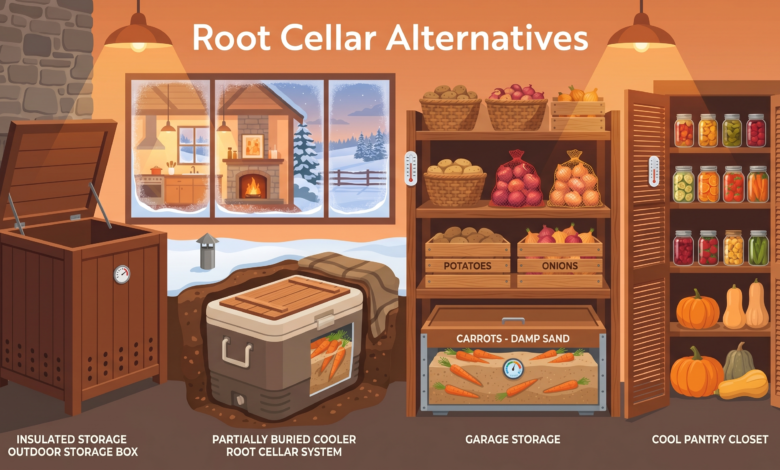
A traditional root cellar is wonderful if you have the hill, soil, budget, drainage, and time to build one. Most people do not. They have a garage that gets too warm, a basement corner that smells like laundry detergent, a crawl space nobody wants to enter, or a suburban yard where digging a cellar would start a conversation with the HOA.
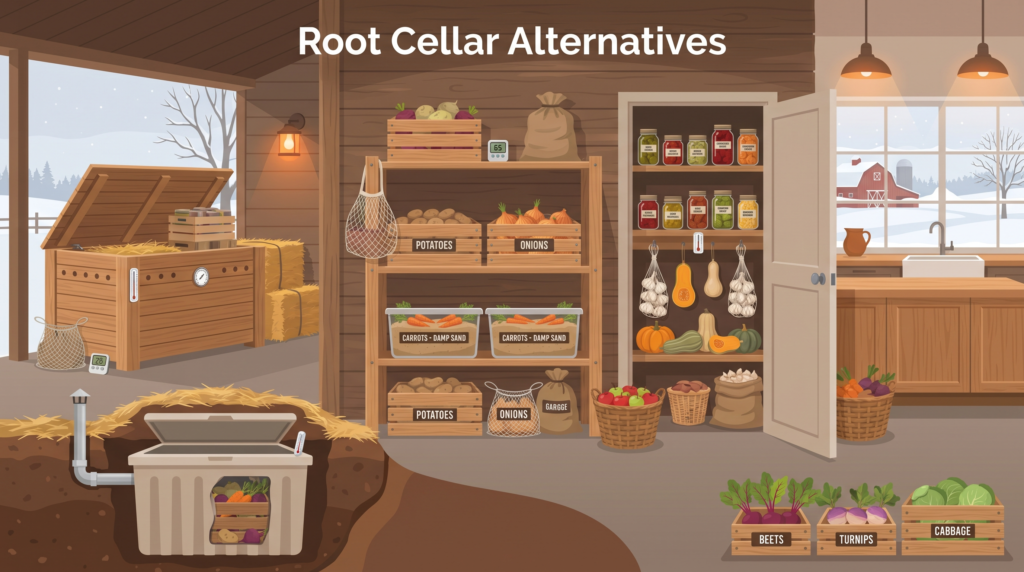
That does not mean you have to give up on winter food storage. The best root cellar alternatives borrow the same old idea: cool, dark, humid storage with steady airflow. You can build that in smaller, cheaper ways if you understand what each crop needs.
This guide covers practical options for homesteaders without a basement root cellar, from garage storage and buried coolers to insulated pantry corners and outdoor boxes.
What a Root Cellar Actually Provides
A root cellar is not magic. It is controlled conditions. Most storage crops keep longer when they are protected from heat, light, drying, and freezing. Some want high humidity. Some want dry air. Some should never be stored together.
The University of Alaska Fairbanks Cooperative Extension explains that vegetables continue to respire during storage, using stored food to stay alive. Their vegetable storage guidance is a useful reminder that stored crops are still living produce, not canned goods.
Before choosing an alternative, think in zones:
- Cold and moist: carrots, beets, turnips, parsnips.
- Cold and drier: potatoes, cabbage, apples.
- Cool and dry: onions, garlic, winter squash.
- Separate storage: apples and pears away from many vegetables.
One small storage area will not handle every crop perfectly. A good homestead pantry often uses several imperfect spaces instead of one perfect cellar.
If you are planning food storage as part of the whole backyard system, our self-sufficient backyard guide pairs well with this topic.
Basement Corner or Crawl Space Storage
If you have a basement, start there. Even a modern basement may have one corner that stays cooler than the rest of the house. North walls, unheated utility rooms, and corners away from furnaces are often useful.
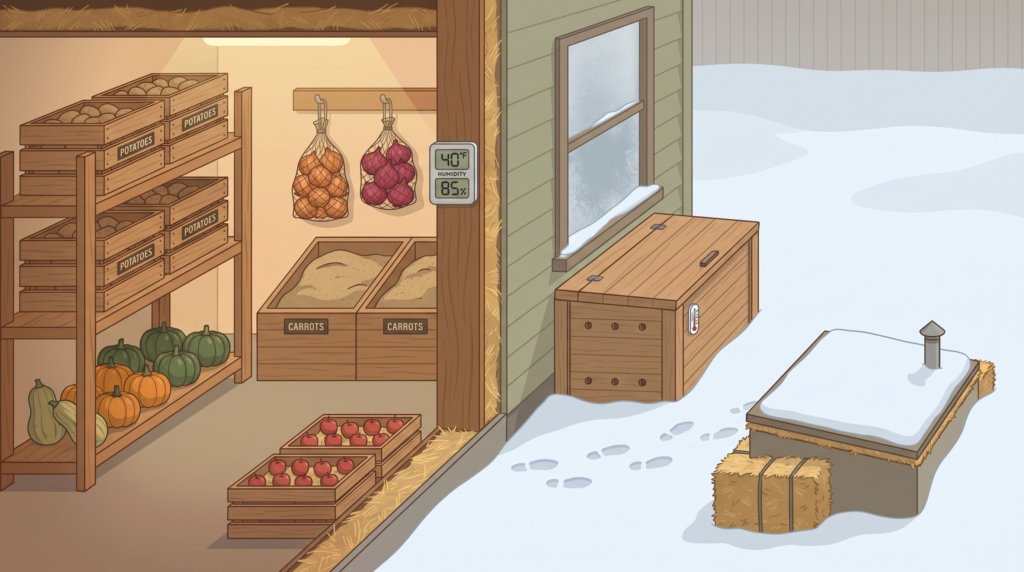
The simplest setup is an insulated cabinet or closet with shelves, a thermometer, a humidity gauge, and small vents. Keep it dark. Avoid storing produce near paint, fuel, cleaners, or anything with strong odors. Potatoes can pick up flavors, and nobody wants a carrot that tastes faintly like solvent.
Crawl spaces can work, but only if they are dry, pest-resistant, and safe to access. Do not store food where rodents, mold, standing water, or insulation fibers are part of the daily scenery. Food storage should not require a headlamp and regret.
Best crops for this setup
- Potatoes in ventilated crates or paper sacks.
- Carrots and beets packed in damp sand in lidded bins.
- Cabbage on shelves with airflow.
- Apples in shallow trays, stored away from potatoes when possible.
Check stored food weekly at first. One soft potato can ruin a crate faster than you think.
Garage and Mudroom Cold Storage
An unheated garage can be excellent or useless depending on climate. In mild winter areas, it may stay too warm. In northern states, it may freeze solid. The trick is to buffer temperature swings.
Use insulated boxes, old coolers, foam-lined cabinets, or wooden crates inside a larger enclosure. Add a thermometer with a min-max memory so you can see what happens overnight. If the garage dips below freezing, move sensitive crops inward or add safer insulation around the bins. Do not use a heat lamp near cardboard, straw, or wood.
Garages are especially good for onions, garlic, winter squash, and pumpkins if they stay cool and dry. Those crops hate the damp conditions that carrots love. Cure them well before storage and keep air moving around them.
Real-world tip
Store by crop, not by harvest day. A mixed crate of onions, apples, potatoes, and squash looks charming for about two weeks. After that, different moisture needs and ethylene gas can shorten storage life. Separate bins are less pretty and much more useful.
For a wider look at low-tech food storage habits, our article on Amish food-growing and preservation methods has several ideas that translate well to small homesteads.
Buried Cooler or Trash Can Root Cellar
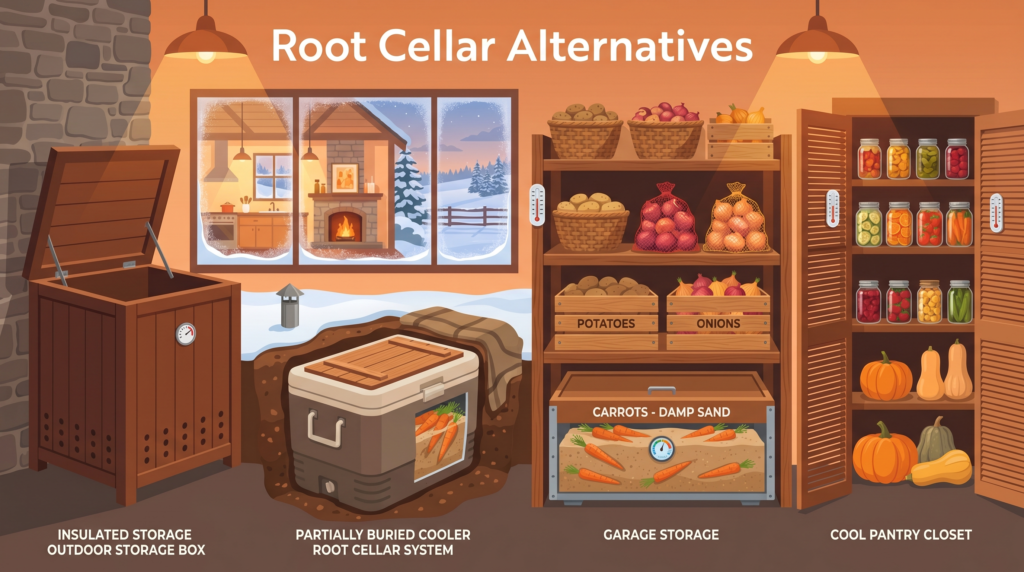
A buried cooler is one of the cheapest root cellar alternatives for a small harvest. Use a sturdy cooler, metal trash can, or food-safe barrel with a tight lid. Bury it in a shaded, well-drained spot so the lid remains accessible. Add straw, leaves, or soil over the top for insulation.
This works best for short to medium storage, not a whole winter of food. It is good for carrots, beets, turnips, and small amounts of potatoes. Pack root crops in damp sand, sawdust, or leaves to reduce shriveling.
Drainage matters more than enthusiasm. If the hole fills with water, you have made a soup pot, not a storage system. Put gravel under the container if needed, choose high ground, and avoid places where roof runoff or snowmelt collects.
Pest and safety notes
- Use a lid that seals against rodents.
- Mark the spot before snow falls.
- Do not bury food in containers that held chemicals.
- Keep the opening easy to lift in winter.
For families with a small garden, one or two buried containers can bridge the gap between refrigerator storage and a full root cellar.
Outdoor Insulated Storage Box
An outdoor insulated box is a step up from a buried cooler. Think of it as a weatherproof produce chest. Build it from plywood, rigid foam, and a sloped lid, then place it against a north-facing wall, under a porch, or inside an unheated shed.
The box needs protection from rain, rodents, and sun. It also needs enough ventilation to avoid condensation. A few small screened vents can help, but watch temperatures closely during the first season. Every climate behaves differently.
This setup is handy when the house is too warm and the garage is crowded. It can store potatoes, carrots in sand, beets, and cabbage. In cold climates, add extra insulation and be ready to move crops indoors during deep freezes.
The National Center for Home Food Preservation has a helpful overview of storing food for safety and quality, including why temperature, moisture, pests, and packaging matter across food storage methods.
Pantry, Closet, and Refrigerator Strategies
Not every root cellar alternative has to be rustic. A cool closet can become a dry pantry for onions, garlic, dry beans, winter squash, and canned goods. Add shelves, keep it dark, and avoid heat from appliances or sunny walls.
For high-humidity crops, a refrigerator may still be the best tool if your harvest is small. Carrots, beets, and turnips can store well in perforated bags or containers that prevent drying without trapping too much moisture. This is not romantic, but it works.
Use the right tool for the crop:
- Winter squash: cool, dry shelf after proper curing.
- Onions and garlic: dry, ventilated baskets or mesh bags.
- Carrots: damp sand, fridge bins, or buried storage.
- Potatoes: dark, cool, ventilated boxes.
- Apples: cool storage away from many vegetables.
The best pantry is usually a patchwork. A closet for dry crops, a garage box for potatoes, a fridge drawer for carrots, and a buried cooler for overflow can outperform one poorly managed cellar.
Use cheap thermometers before you build anything permanent. Put one in the garage, one in the closet, one near the basement wall, and one outside in the shade for a week. The numbers will tell you which spaces are naturally useful. Guessing based on how a room feels for five minutes is how good produce ends up sprouting in January.
Common Mistakes to Avoid
The first mistake is storing damaged produce. Bruised potatoes, cut carrots, and nicked beets should be eaten first. Storage is for clean, sound crops.
The second mistake is washing everything too aggressively. Many root crops store better when excess soil is brushed off after curing or drying, not scrubbed clean and put away wet. Follow crop-specific guidance.
The third mistake is forgetting labels and dates. In October, you will remember which crate came from the early potato bed. In February, every dusty box looks the same.
Other common problems include:
- Storing onions near high-humidity crops.
- Letting light turn potatoes green.
- Ignoring condensation inside plastic bins.
- Allowing freezing and thawing cycles.
- Checking stored food too rarely.
Conclusion
You do not need a stone cellar under a farmhouse to store food through winter. You need crop knowledge, steady temperatures, darkness, humidity control, pest protection, and the habit of checking your stores.
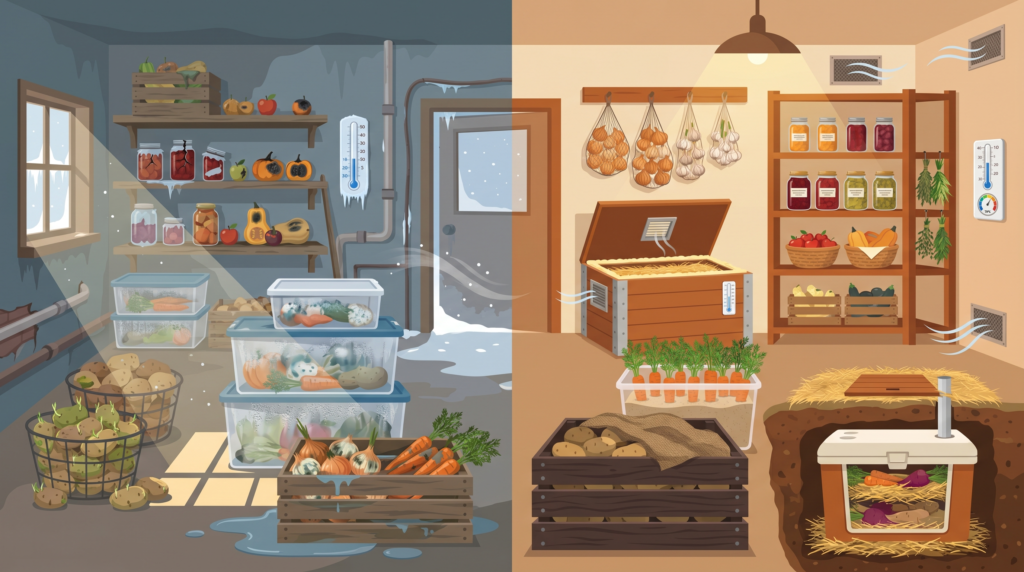
Start with one crop and one storage method. Potatoes in a cool dark box. Carrots in damp sand. Garlic in a dry closet. Build confidence from there. A homestead pantry grows stronger through small systems that actually get used.
FAQ
What is the easiest root cellar alternative?
The easiest option is usually a cool basement corner, unheated garage cabinet, or refrigerator drawer, depending on the crop. Start with the space you already have before digging or building.
Can I store potatoes without a root cellar?
Yes. Store potatoes in a dark, cool, ventilated container such as a crate, paper sack, or insulated garage box. Keep them away from light to prevent greening.
Can a buried cooler work as a root cellar?
Yes, for small amounts of produce. Use a clean sturdy cooler, bury it in a shaded well-drained spot, protect it from pests, and monitor moisture and freezing risk.
What vegetables store best without refrigeration?
Onions, garlic, winter squash, pumpkins, dry beans, and properly stored potatoes are good candidates. Carrots and beets usually need colder, more humid storage.
Should apples be stored with vegetables?
It is better to separate apples from many vegetables when possible. Apples release ethylene gas, which can speed ripening and spoilage in nearby produce.
">Discover Homesteading
Send an email