Composting Toilet vs Septic for Off-Grid Living: Costs, Laws, and Best Choice
 ">Discover Homesteading
Send an email
">Discover Homesteading
Send an email
Composting Toilet vs Septic for homesteading
The bathroom is where a lot of off-grid dreams meet county reality. Solar panels feel exciting. A garden feels wholesome. But the moment you ask how waste leaves the house, the conversation gets serious fast.
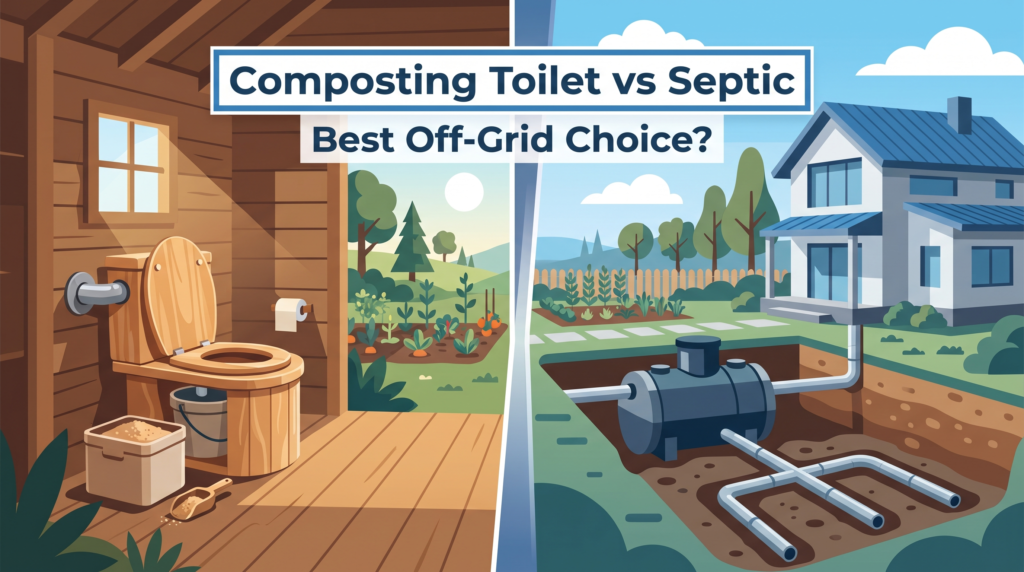
The composting toilet vs septic choice is not about which system is more “off-grid.” It is about land, law, soil, water, budget, maintenance, and how much comfort your household expects every day. A composting toilet can be simple and waterless. A septic system can feel normal and low-effort. Either one can be a mistake in the wrong place.
Here is the practical way to compare them before you buy land, build a cabin, or order a toilet you may not be allowed to use.
How the Two Systems Work
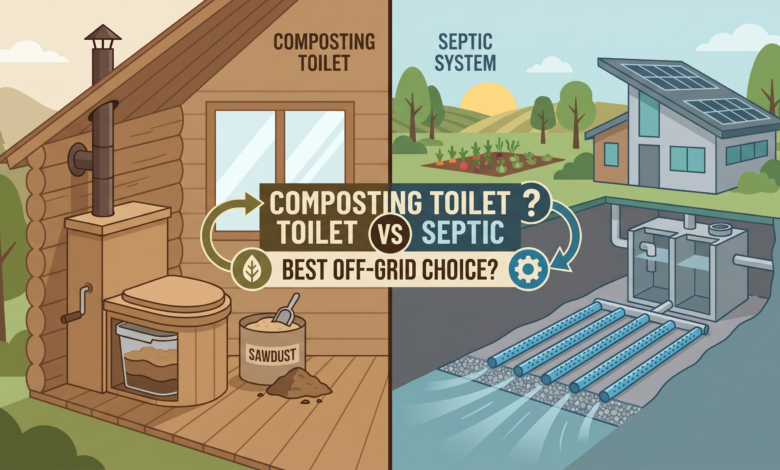
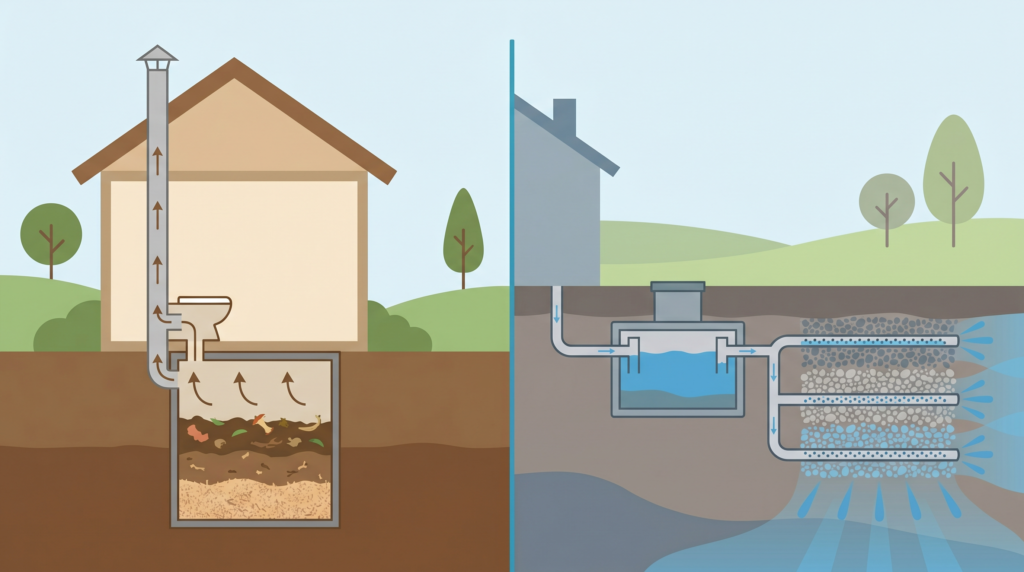
A septic system is an underground wastewater treatment system. Wastewater leaves the house, enters a septic tank, solids settle, and liquid effluent moves into a drain field where soil continues the treatment process. It uses water, land, suitable soil, and careful placement away from wells and surface water.
A composting toilet treats human waste with little or no flushing water. Most systems separate liquids from solids or manage moisture with ventilation, carbon material, and controlled decomposition. Some are self-contained units inside the bathroom. Others move waste to a larger chamber below or outside the house.
In everyday terms:
- Septic feels more like a conventional house.
- Composting toilets use far less water.
- Septic usually costs more upfront.
- Composting toilets require more visible participation.
- Local codes can decide the winner before you do.
If you want a wider overview of toilet options, start with our complete beginner’s guide to off-grid toilets. This article focuses on the big decision: composting toilet or septic.
Cost Comparison: Upfront and Ongoing
A composting toilet is usually cheaper to install. A basic self-contained unit may cost hundreds to a few thousand dollars. Add venting, a small fan, urine handling, a finished bathroom space, and extra bins or carbon material, and the real cost rises, but it is still often far below a full septic installation.
A septic system can cost several thousand dollars to well over $20,000 depending on soil tests, engineering, tank size, drain field design, permits, excavation, and local labor. Difficult sites cost more. Rocky ground, high water tables, steep slopes, small lots, and poor soils can turn “normal septic” into a custom project.
Ongoing costs
Composting toilets need carbon material, occasional replacement parts, and regular emptying. Some models use a small amount of electricity for fans or heaters. The cost is usually modest, but the maintenance is personal and cannot be ignored.
Septic systems need pumping, inspections, and careful use. You may go years without thinking about it, but when a drain field fails, the repair can be painful. The EPA’s homeowner guide to septic systems is worth reading before you treat septic like a bury-it-and-forget-it appliance.
For a part-time cabin, composting may be dramatically cheaper. For a full-time family home, septic may be expensive upfront but easier to live with if the land supports it.
Laws and Permits: The Part You Cannot Skip
In the United States, wastewater rules are usually handled at the state, county, or local health department level. That means the answer can change from one county road to the next. Some places allow composting toilets as the primary toilet system. Some allow them only with an approved graywater or septic system. Some require a septic system for any permitted dwelling.
This is why the smartest time to ask sanitation questions is before buying land. A beautiful wooded lot is not a bargain if it cannot pass a perc test and the county will not approve your alternative system.
Questions to ask the county
- Is a septic permit required for a full-time residence?
- Are composting toilets allowed as a primary system?
- Is graywater regulated separately?
- What setbacks apply from wells, streams, property lines, and buildings?
- Are NSF-certified composting toilets required?
- Can a tiny home, cabin, or RV use different rules?
Do not rely on internet stories from another state. Call the local office and take notes. A five-minute conversation can save months of frustration.
NSF explains that certified composting toilets are evaluated under NSF/ANSI Standard 41 for performance factors such as capacity, odor, and bacterial content in composted output. Their composting toilet guidance is useful when comparing models and claims.
Water Use and Off-Grid Practicality
Composting toilets win on water use. A household using a flush toilet can send thousands of gallons a year into wastewater. On a dry homestead, that matters. Every gallon used for flushing is a gallon you had to pump, filter, store, or haul.
A composting toilet also reduces pressure on off-grid water systems. If your well is slow, your rainwater tank is small, or your cabin is seasonal, not flushing can be a major advantage.
Septic systems, however, fit better with conventional plumbing. Showers, sinks, laundry, and toilets all move wastewater through one familiar system. Guests understand it. Lenders and inspectors understand it. Future buyers understand it. That matters if your homestead may ever be sold.
For broader planning, connect this decision to your water setup. Our off-grid water systems guide covers why sourcing, storage, filtration, and distribution should be planned together instead of one project at a time.
Maintenance: Which One Is Easier to Live With?
A composting toilet is not gross when it is managed well, but it is hands-on. You need the right balance of moisture, airflow, cover material, and emptying schedule. If the system smells, it is usually too wet, poorly vented, overloaded, or lacking enough carbon material.
Good composting toilet habits include:
- Keeping sawdust, coconut coir, or other cover material nearby.
- Checking the vent fan and screen regularly.
- Emptying before the system is overfull.
- Managing urine separately if the model requires it.
- Using finished material only as allowed by the manufacturer and local rules.
A septic system is easier day to day because it disappears from view. The tradeoff is that abuse shows up later and costs more. Flushing wipes, grease, harsh chemicals, or too much water can damage the system. Parking heavy equipment over the drain field can compact soil and cause failure.
In a household where everyone follows rules, both systems can work. In a busy home with guests, kids, rentals, or people who do not want to think about bathroom management, septic is usually more forgiving socially.
Best Choice by Situation
Choose composting toilet when water is limited
If you haul water, rely on rain tanks, or have a low-yield well, a composting toilet can make off-grid life much easier. It also fits cabins, tiny homes, workshops, guest spaces, and remote sites where trenching a full septic system is expensive or impossible.
Choose septic for a full-time conventional home
If you are building a permitted family home on land with suitable soil, septic is often the smoother long-term choice. It handles total household wastewater, works with normal fixtures, and may satisfy lenders, insurers, inspectors, and future buyers more easily.
Use both when the site allows it
Some homesteads use septic for graywater and backup plumbing while using a composting toilet to reduce water use. Others install a composting toilet in a cabin or barn while the main house uses septic. Hybrid systems can be excellent, but only when designed legally.
If you are still in the early planning stage, look at utilities, water, food, and waste systems together before committing to one sanitation plan.
Common Mistakes to Avoid
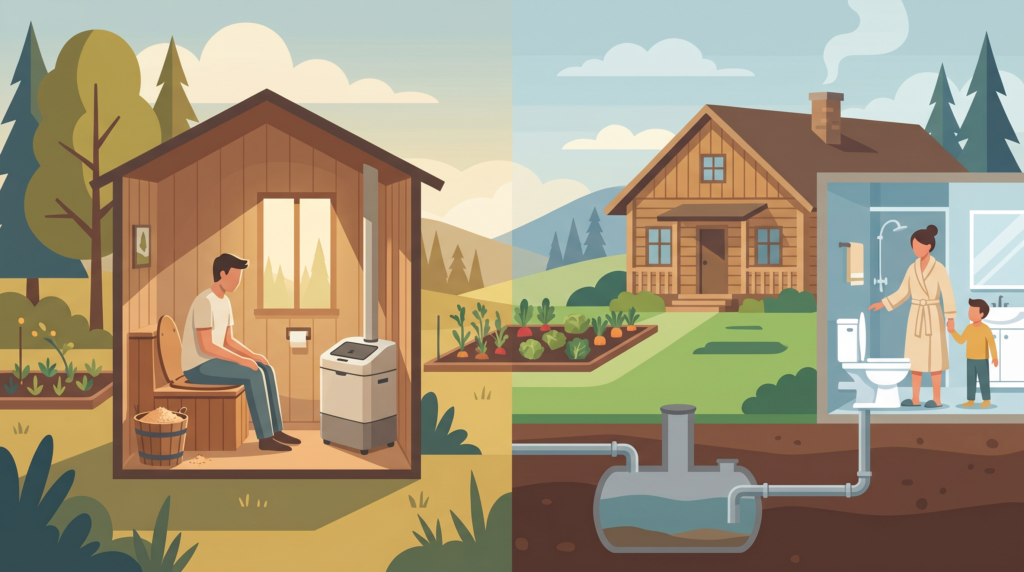
The first mistake is assuming rural land means no rules. Rural counties still care about wastewater because bad sanitation can contaminate wells, streams, and neighboring properties.
The second mistake is choosing based only on upfront cost. A cheap toilet that creates legal trouble is not cheap. A septic system that fails because the soil was wrong is not a system; it is a buried bill waiting to surface.
The third mistake is ignoring graywater. Even if a composting toilet handles human waste, sinks, showers, and laundry still create wastewater. Many counties regulate graywater, and it needs a safe plan.
Other mistakes include:
- Buying a composting toilet before checking code.
- Skipping a perc test before buying land.
- Undersizing a system for full-time use.
- Forgetting winter performance in cold climates.
- Letting guests use the system without simple instructions.
So… Composting Toilet or Septic?
If you want the lowest water use and a simpler installation, a composting toilet can be the better fit. It is especially strong for cabins, tiny homes, dry climates, and homesteaders who do not mind active maintenance.
If you want a conventional full-time home with normal plumbing and easier resale, septic is often the better choice when the land can support it. It costs more, but it solves the whole wastewater question instead of only the toilet question.
The best system is the one your land, county, water supply, budget, and household habits can support for years. Start with the permit office, then choose the technology.
FAQ
Is a composting toilet legal for off-grid living?
It depends on your state, county, and property use. Some areas allow composting toilets as primary systems, while others require septic or allow composting toilets only with additional wastewater handling.
Is septic better than a composting toilet?
Septic is usually better for conventional full-time homes with normal plumbing. Composting toilets are better when water is limited, installation access is difficult, or the structure is seasonal or small.
Do composting toilets smell?
A well-managed composting toilet should not smell bad. Odor usually means too much moisture, poor ventilation, overloading, or not enough carbon cover material.
Do I still need septic if I have a composting toilet?
You may still need a legal plan for graywater from sinks, showers, and laundry. Some counties also require septic for permitted dwellings even if the toilet itself is composting.
How often does a septic tank need pumping?
Many household septic tanks are pumped every few years, but timing depends on tank size, household size, water use, and solids load. Local professionals can inspect and recommend a schedule.
">Discover Homesteading
Send an email